Dr. Seuss Inspired Rhyming Game: A Memory-Style Card Match
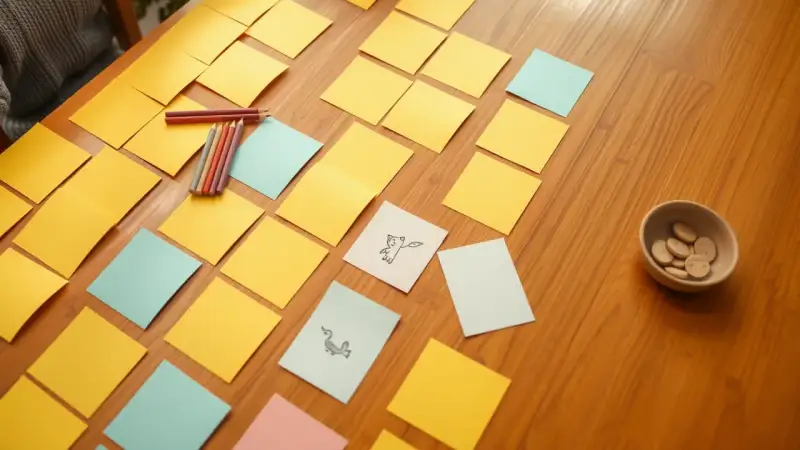
Picture a stack of bright, playful cards laid face down in rows, each one holding a single word and a small doodle. Flip two over, and if the words rhyme, you keep the pair. That is the Dr. Seuss inspired rhyming game: a Memory-style match that builds rhyme awareness and early word recognition.
It suits kids getting ready for kindergarten, especially children who love a bit of competition. The player with the most pairs at the end wins.
How do you play the rhyming game?
Shuffle the cards and spread them face down on a table or rug. Players take turns flipping two cards at a time and reading the words aloud, with help from a grown-up if needed.
- If the two words rhyme, the player keeps the pair and takes another turn if you like.
- If they don’t rhyme, the cards go back face down in the same spots.
- When every card is gone, count the pairs. The most pairs wins.
Younger siblings can join in. A three-year-old can team up with an adult, flip cards, and point out any letters she knows.
What do you need to make your own cards?
You only need a few supplies:
- White cardstock, or plain index cards
- Markers or colored pencils in bold, cheerful colors
- Scissors or a paper trimmer
- Clear packing tape or a laminator (optional, for durability)
Cut the cardstock into rectangles about 2.5 by 3.5 inches, roughly playing-card size. A set of 20 to 24 cards, which makes 10 to 12 pairs, is a good length for a first game.
Which words should go on the cards?
Choose simple one-syllable words with clear, common endings. Each pair should share a sound but not a spelling at first, or the reverse if you want it easier. Starter pairs include:
- cat and hat
- fox and box
- bee and tree
- sun and run
- log and frog
- star and car
- bed and red
- pig and wig
Write each word in large, clear lowercase letters in the center of the card. Add a small drawing in the corner for beginning readers, so a child who can’t read “frog” yet can still match it to “log” by sound. For a Seuss-style look, use wobbly, tilted lettering, stripes, polka dots and a limited palette of red, blue, and yellow with black outlines. Keep the backs identical, either plain white or colored in one stripe pattern, so no card gives itself away.
How can you adjust it for different ages?
For younger children, use only six pairs and keep the pictures on every card. Say each word aloud together before you start. For older kids, take the pictures off and add trickier pairs with different spellings, such as “blue” and “shoe.”
You can also change the rules:
- Ask players to name a third word that rhymes before keeping a pair.
- Lay the cards face up and race to find matches.
- Play cooperatively, with everyone working to clear the table together.
Can the game help with reading?
Because players see each word and say it aloud as they flip, they begin to recognize common words after a few rounds. Matching sounds also trains the ear for the way words are built, which supports early reading. Keep rounds short, around ten minutes, and stop while everyone is still having fun.
Store the cards in a zip-top bag or small tin so the set is ready for the next rainy afternoon, and for Read Across America time in early March.