A Printable-Style Morning Routine Checklist That Gets Kids to School on Time
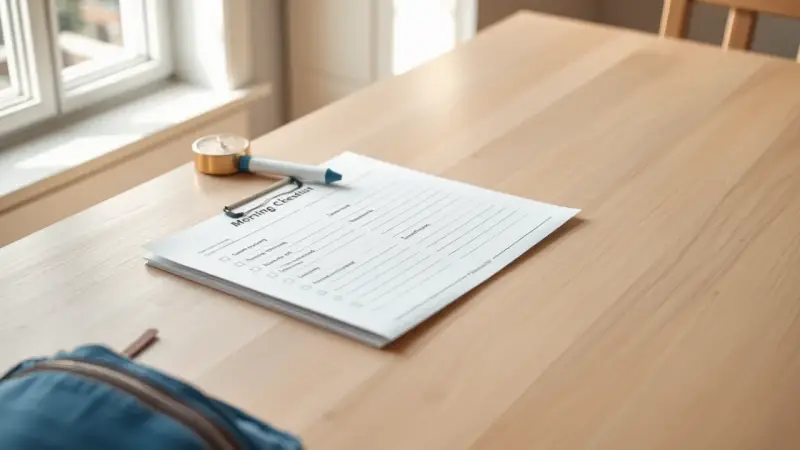
A laminated checklist with a dry erase marker clipped beside it can change a school morning. Each child gets a sheet of their own, ticks off every task, and heads for the door when the last box is marked. It works best with two partners: a visible timer and a small reward to work toward.
The system suits children from about kindergarten age and up. Younger ones can follow a picture version. The idea is to hand the morning over to the kids, so they run their own routine and a parent no longer has to remind them of every step.
Step one: build the checklist
Writing a fresh list on scrap paper each day gets old fast and wastes paper. A reusable sheet solves that, and it also stops any “why doesn’t mine have a list?” complaints when there is more than one child.
Design a page in any design app or by hand on poster board or cardstock. Here is a layout that works:
- Title: “My Morning Routine” in large, friendly letters at the top.
- Tasks: one per line, with a box or circle at the left to mark.
- Colors: pick a different color scheme for each child, such as navy and coral, so every sheet is clearly theirs.
- Blank lines: leave a few empty rows at the bottom for extra jobs like feeding a pet or packing a library book.
- Name: write each child’s name at the bottom before you laminate.
Typical tasks include getting dressed, eating breakfast, brushing teeth and hair, putting on shoes, packing the backpack, and filling the water bottle. Keep the list short enough to fit on one letter-size page.
For preschoolers, swap words for small pictures: a shirt, a toothbrush, a bowl, a shoe. Children who cannot read yet can still follow the sequence.
Make it reusable
- Print the sheet on letter-size paper or cardstock.
- Laminate it, either with a home laminator or with self-adhesive laminating sheets.
- Give each child a dry erase marker. Wrap a strip of washi tape around the base of each marker so nobody argues about whose is whose.
- Hang the sheet at kid height, on the fridge or by the door, or keep it on a clipboard.
- Wipe the sheet clean each afternoon so it is ready for the next day.
Dry erase markers are surprisingly motivating. Crossing off a task with one feels like a treat, so children often move faster just for the satisfaction of marking the box.
Step two: set a timer
Nothing fancy is required. The timer on a microwave or oven does the job, as does a kitchen timer or a phone. Tell the children at the start how long they have, and let the beeping clock be the one that says “time’s up” instead of a parent.
Choose a window that is realistic, based on how long the tasks actually take on a normal day. It should feel doable, not rushed.
Children are still in charge of speaking up when they need help. A younger child may need a hand tying shoes, or a lunchbox may be on a high shelf. The rule is that they ask, and the parent helps. That keeps ownership with the child without leaving them stuck.
Step three: set a goal
A checklist and a clock work better with something to look forward to. Pick a reward that matters to your family. Some ideas:
- Riding a scooter or bike to school instead of being driven.
- A few extra minutes of tablet time.
- Extra play outside after school.
- A special snack tucked into the lunchbox.
The rule is simple: finish every item before the timer goes off and the reward is on. If a task is missed, the reward waits until the next day. Staying calm and consistent matters most here. Remind your child that they had enough time and that tomorrow is a new chance. A child who sees the rule applied the same way every day soon learns that it is the choices made that morning that decide the outcome.
Variations
- Night-before list: add a second sheet for evening jobs such as laying out clothes and packing the backpack, which makes the morning even lighter.
- Weekly goal: give a sticker for each on-time morning and offer a bigger treat after a full week.
- Older kids: let them design and decorate their own list, which builds buy-in.
- Siblings: let each child time themselves against the clock, not each other, to avoid races and arguments.
FAQ
What age can kids start using a morning checklist?
Children around five or six can manage a written list, and younger ones do well with a picture version where each task is a small drawing.
How long should the timer be set for?
Time one ordinary morning first, then add a small cushion. The goal is a window that feels fair, so a child who stays focused can finish comfortably.