How We Do Discipline at Home: A Clip Chart and Marble Jar System
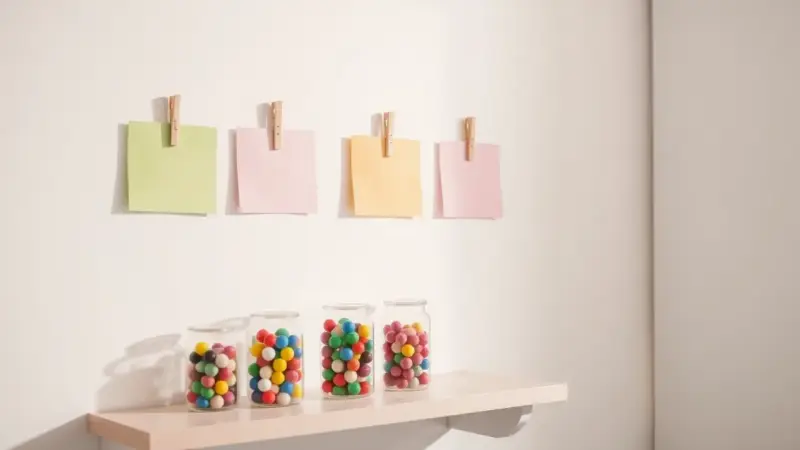
A row of seven bright card stock squares taped together, a clothespin for each child, and a few labeled jars of marbles: that is the whole system. A clip chart gives kids a clear picture of how their day is going, and the jars show how those days add up over time.
The setup is easy to make, cheap, and works in a kitchen or family room where kids can reach it. Here is how to build it and how to adapt it to your own household.
The idea: a clip chart plus reward jars
The system has two parts that work together.
- The clip chart tracks behavior through the day. Each child moves a clothespin up when they are helpful or make good choices, and down when they are not.
- The jars track the bigger picture. At the end of the day, the color a child landed on decides how many marbles go into their own jar.
One key rule keeps things calm: rewards and consequences do not happen in the moment. They apply the next day. That gives kids the whole day to change course, and it means a bad morning does not have to ruin the afternoon.
How to make it
Supplies
- Card stock in seven colors
- Clear packing tape
- One wooden clothespin per child
- Permanent marker
- One jar per child, plus one extra jar for the marbles waiting to be earned
- Marbles
- Vinyl and a cutting machine such as a Cricut, or a marker and paper, for jar labels
- A card or sheet of paper for the rewards list
Steps
- Cut each color of card stock to about 5 by 6 inches. A full 8.5 by 11 inch sheet per color also works if you have the wall space and want a bigger chart.
- Tape the pieces together in a vertical strip, with the best color at the top and the lowest at the bottom. A classroom-style order works well if your kids already know one from school. In that order, pink is the best and red is the lowest.
- Cover the front with clear packing tape. It gives a laminated look and protects the edges from wear.
- Write each child’s name on a clothespin with a permanent marker.
- Hang the chart at kid height in a spot everyone passes often.
- Write what each color means and post it right above the chart. Include the marbles earned at the top and the consequence at the bottom, so nothing is left to guess.
- Label each jar with its owner’s name using cut vinyl, marker, or a paper label taped on. Put them near the chart with the extra jar of marbles.
Running it day to day
Every morning, each child starts on green, the middle of the chart. They are in charge of moving their own clothespin, which builds ownership and cuts down on nagging.
At bedtime or after dinner, look at where each pin ended up. Each color is worth a set number of marbles. For example, a child ending on purple might add two marbles, and one ending on blue might add one. The child puts the marbles in their own jar.
When a jar is full, the child picks a special activity or meal with a parent. Letting kids choose, even if it is a favorite fast-food spot, makes the goal feel personal.
Choosing meaningful consequences
The lowest colors should matter to your child. Think about what they really care about: time outside with friends, or screen time such as television, tablets and phones. Losing one of these for the next day gives the lower colors real weight, so kids tend to steer clear of them. Keep the consequences fair, and tell kids ahead of time what they are.
Variations to fit your family
No two families need the same setup. Here are some ways to adjust it.
- Print the rules on the chart. Instead of a separate card, write rewards and consequences right on each color. A chart that is not laminated can last many months.
- Swap the marbles. Use gems, with a goal such as 100 to trade for a prize. Poker chips work too, with one color per child, traded for a small toy, a snack or a one-on-one date with a parent.
- Change when rewards are given. Some families only hand out chips when a child is on green or higher. Others let kids lose marbles for landing below green.
- Adjust for age. A younger child going through a rough patch may need easier targets or gentler consequences than an older sibling.
- Add a bonus. Give an extra marble in the morning if a child finishes a morning routine checklist before a timer goes off.
- Pick your own colors. Any seven colors work, as long as everyone knows which one is best and which is lowest.
Tips for making it stick
- Keep the design plain. A simple list is easier for kids to read than a fancy printed layout.
- Be consistent. Check the chart at the same time each day.
- Praise the clip-ups out loud so kids notice progress, not just slip-ups.
- Review the colors with your kids when you start, so they can explain them back to you.
- Revisit the rewards every few months. If a prize has lost its appeal, swap it for something new.
Once the chart is up, the system mostly runs itself. Kids see where they stand, know what comes next, and can change their own day with one small clothespin move.